
Service
Treatment for implant complications in Gloucester
When a dental implant goes wrong, it requires prompt attention. Dr. Brian Leland treats failing implants and conditions like peri-implantitis at our Gloucester clinic. You receive a thorough evaluation to determine the cause of the issue. We focus on restoring the health of your bone and gums.
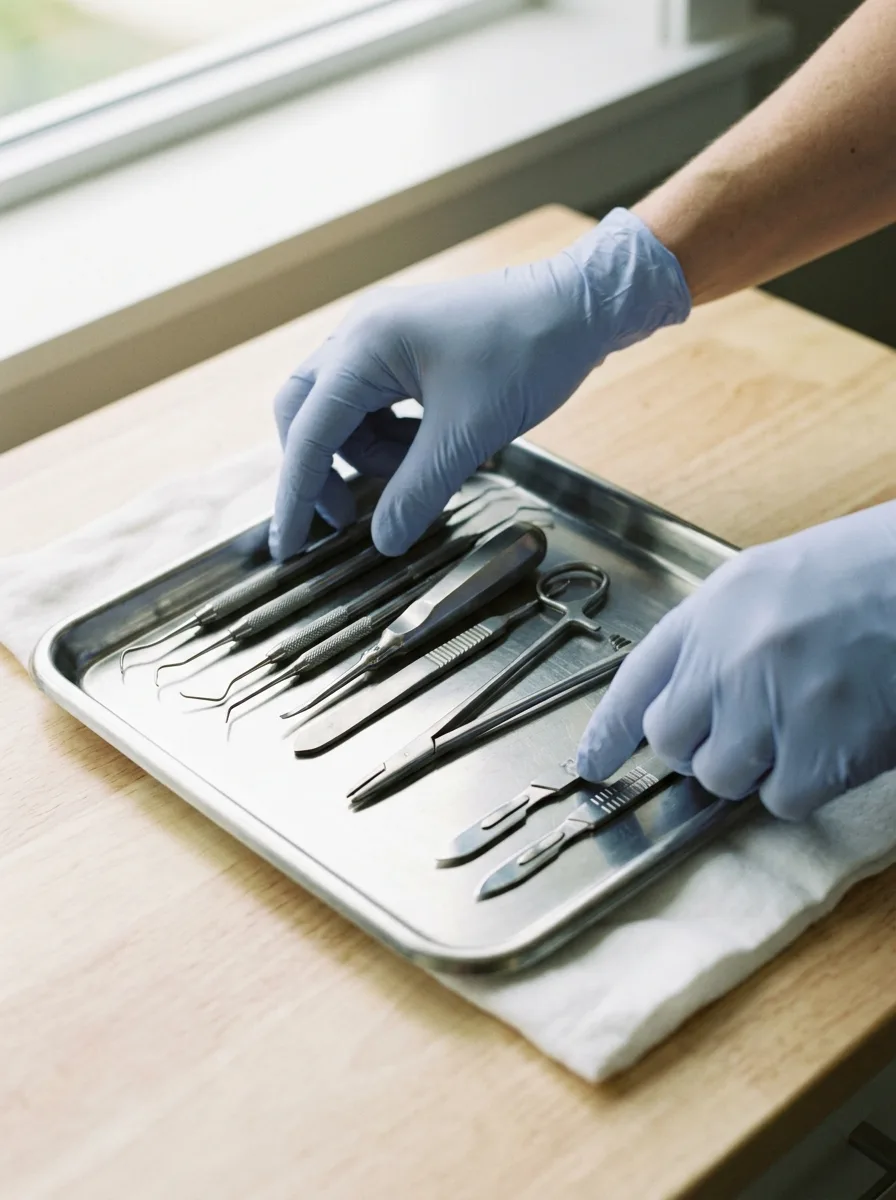
Different problems need different treatments
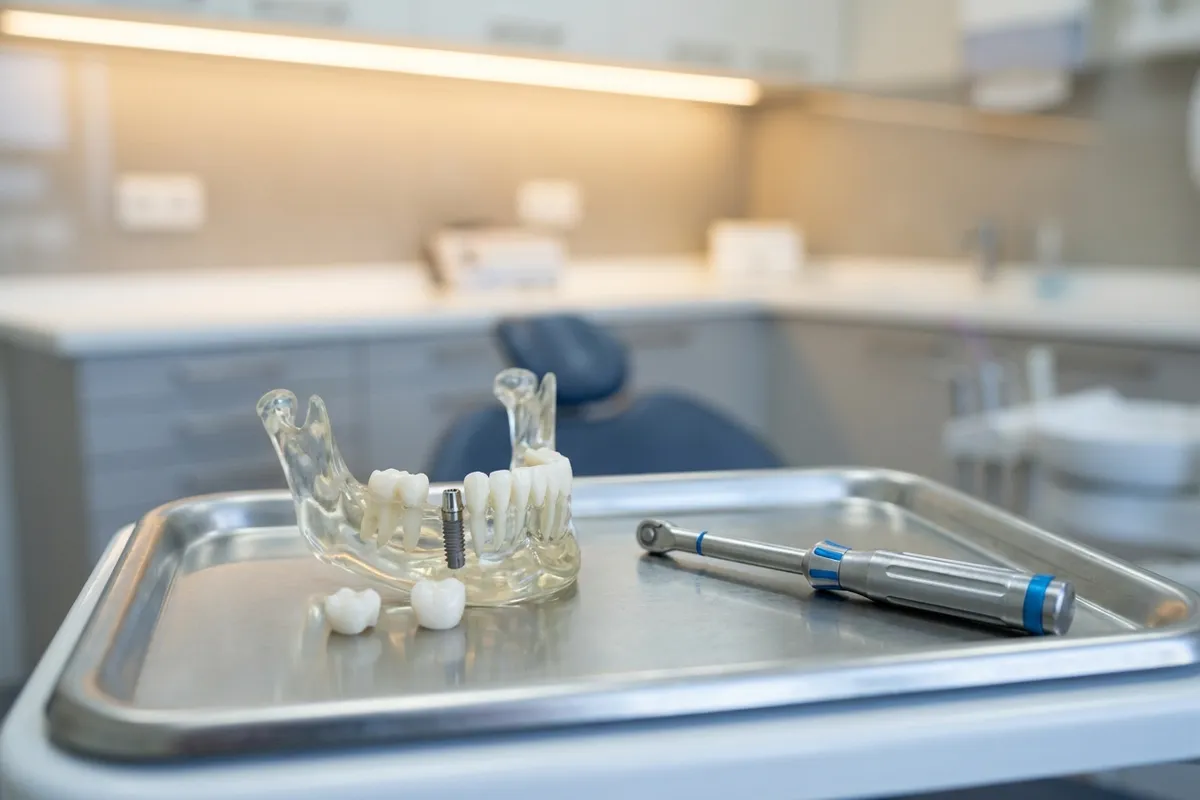
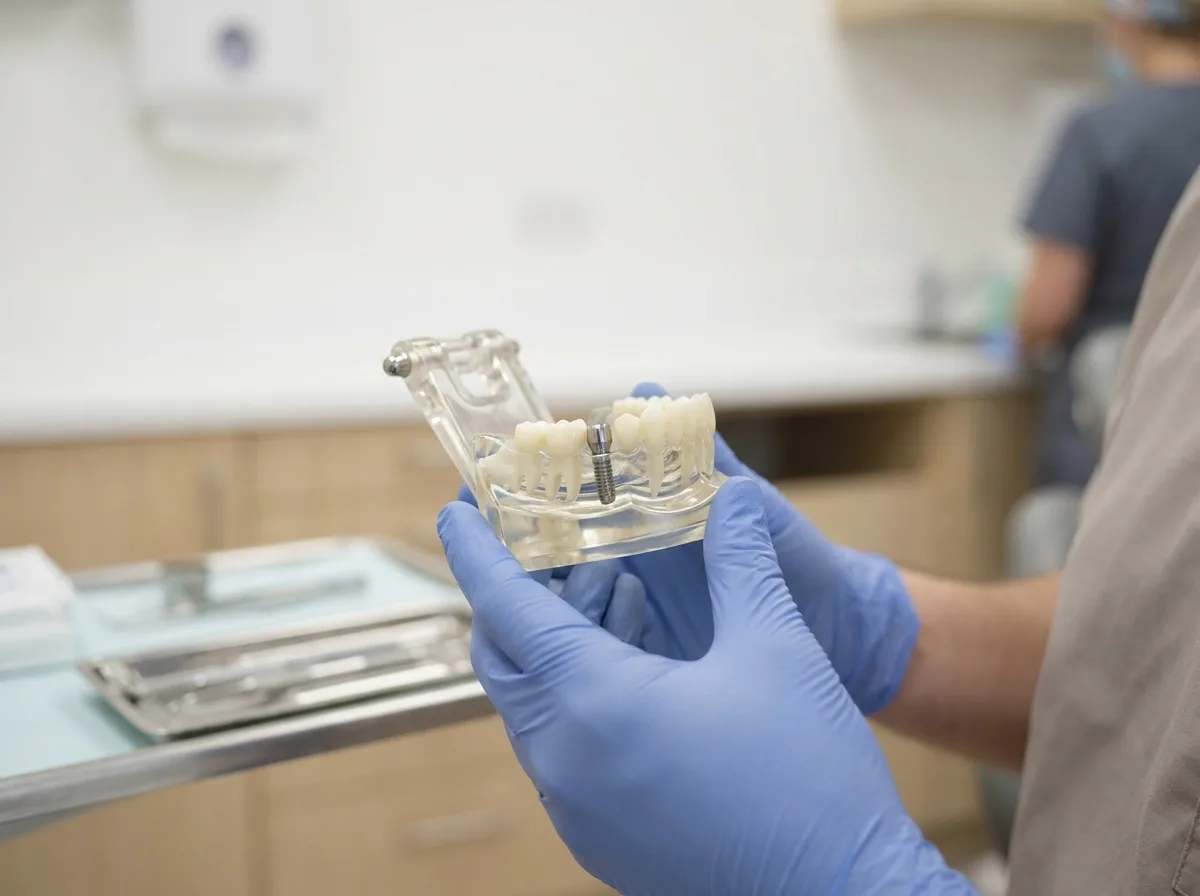
A dental implant includes the fixture in the bone and the parts connecting it to a crown, bridge, or denture. Problems may involve surrounding tissues, bone support, a loose screw, damaged replacement teeth, or the way teeth meet. An apparent loose implant can therefore have several explanations. Examination is needed before assuming the implant body has failed or deciding that removal is necessary.
Peri-implant mucositis is inflammation of the soft tissue around an implant. Peri-implantitis involves inflammation together with loss of supporting bone. Mechanical complications and inflammatory disease can occur separately or together, and may appear soon after placement or years later. Treatment addresses the identified cause while considering whether the implant and restoration remain useful and maintainable.
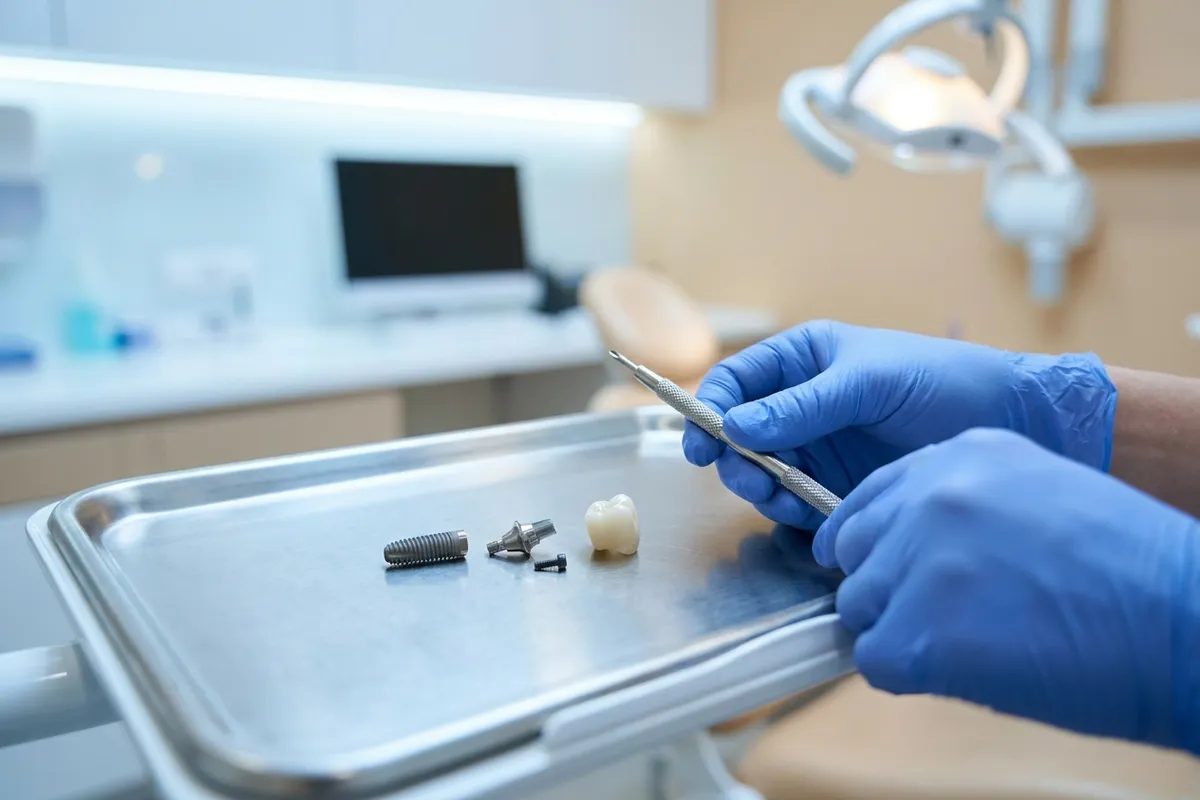
Why changes around an implant deserve assessment
Implants do not develop tooth decay, but the tissues supporting them can become diseased. Plaque control, a history of periodontal disease, smoking, and other factors can affect long-term health. Damage to a restoration or an unfavorable bite may need a different response from infection. Earlier evaluation can help prevent a minor problem from progressing, although the outcome depends on the condition found.
- Report bleeding, tenderness, swelling, discharge, or a bad taste around an implant rather than treating these as a normal cleaning reaction.
- Arrange assessment if a crown rotates, a denture attachment changes, or chewing produces a new clicking sensation.
- Mention repeated food trapping or difficulty reaching beneath a restoration, since the design and cleaning access may need review.
Symptoms, risk factors, and important history
Some implant disease causes little discomfort, so absence of pain does not establish that bone support is healthy. Tell the team when the implant was placed, when symptoms began, and whether an earlier complication was treated. Your medical history, tobacco use, periodontal history, and maintenance visits help explain risk and guide care without assigning blame.
- Bring implant identification records and previous treatment reports if available; compatibility matters when replacing screws or other components.
- Explain whether movement involves the replacement tooth, its connection, or the entire area, without repeatedly testing it yourself.
- Share changes in diabetes control, medicines, smoking, or daily cleaning that may affect assessment and healing.
When to call and how to protect the area
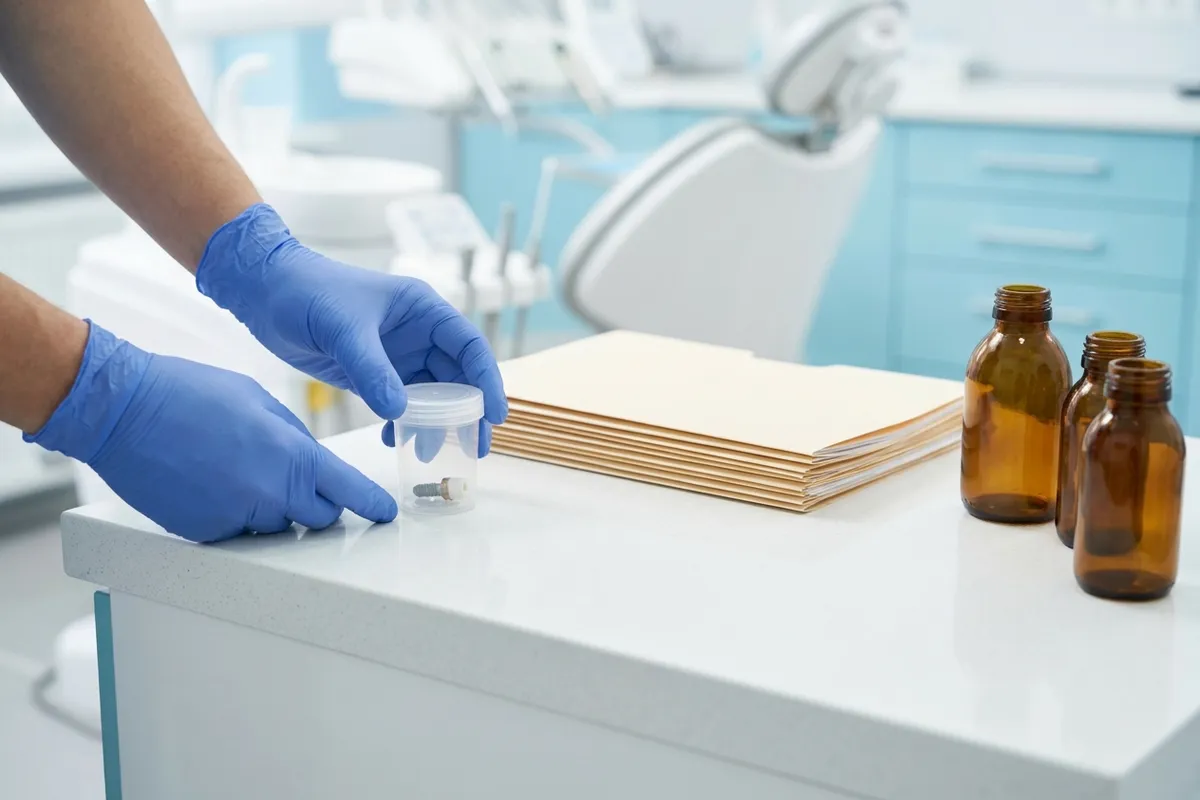
A loose or painful implant needs prompt professional attention. Avoid repeatedly twisting the restoration, tightening parts yourself, or continuing to chew hard foods on a moving component. Call the treating team for advice on how urgently the area should be seen and whether a temporary adjustment is needed. Saving a detached component may help identification, but do not attempt to put it back yourself.
Rapidly spreading swelling, difficulty swallowing or breathing, or uncontrolled bleeding requires urgent medical care. For less acute symptoms, arrange assessment rather than waiting for the next routine recall. Before a visit, gather records and a medicine list and describe what has changed; do not start leftover antibiotics or stop prescribed medicines on your own.
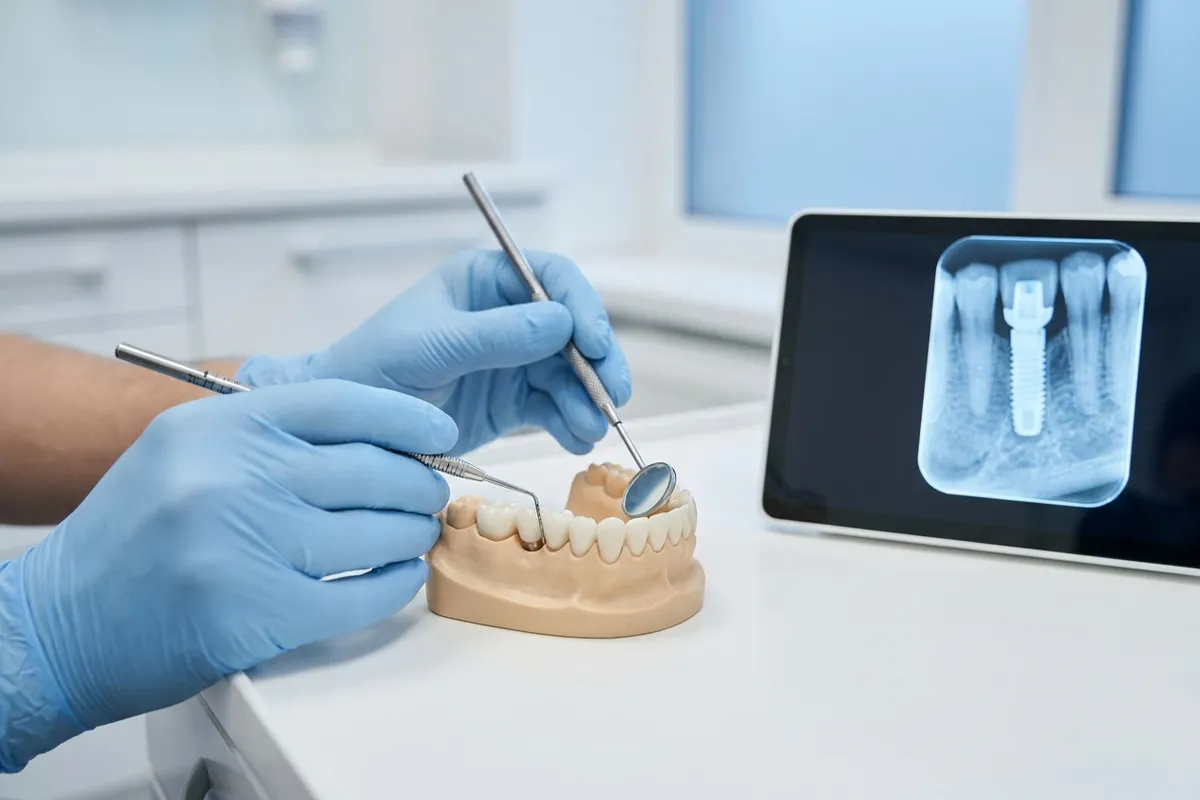
Finding the source of the complication
The dentist examines the restoration, soft tissues, implant stability, bite, and cleaning access. Gum measurements and appropriate imaging help assess inflammation and bone levels, especially when earlier records are available for comparison. The distinction between a loose connection and movement of the implant body is important because treatment and prognosis differ. Complex findings may need specialist input.
- Ask whether the problem is mechanical, inflammatory, or a combination, and what evidence supports that explanation.
- Compare current imaging and tissue measurements with earlier records when available instead of judging a single picture in isolation.
- Discuss whether the restoration allows reliable cleaning and whether its removal or redesign would help treatment and maintenance.
Repair, disease treatment, and replacement options
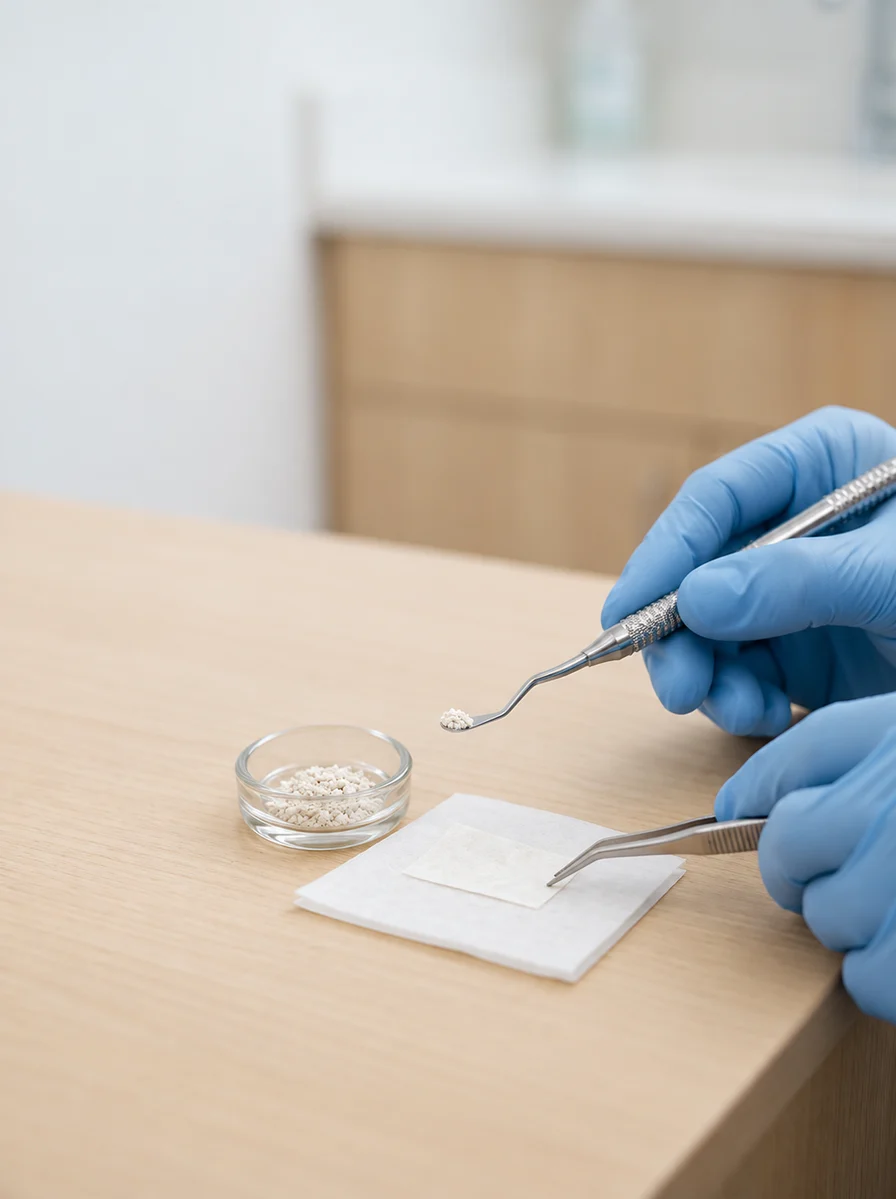
A mechanical problem may be managed by repairing or replacing a component and adjusting the restoration when appropriate. Soft-tissue inflammation may respond to professional cleaning, improved home care, and correction of contributing factors. Peri-implantitis can require additional treatment, sometimes including surgery to access and clean the implant surface. Selected bone defects may be considered for regenerative treatment, but lost support cannot always be restored.
An implant with inadequate stability or severe damage may need removal. Replacement, grafting, a bridge, or a removable appliance can then be discussed according to the site and your goals. Antibiotics alone do not correct a loose part or reliably resolve all implant disease. Ask about expected benefits, limitations, staged treatment, and the possibility that preserving the existing implant may not be realistic.
Monitoring after repair or disease treatment
Long-term care includes a cleaning method suited to the restoration and a review schedule based on the findings. The team may reassess tissue inflammation, bone support, and component stability after treatment. Improvement in symptoms is useful, but does not replace these checks. Implant disease can recur, so continued maintenance remains part of the plan.
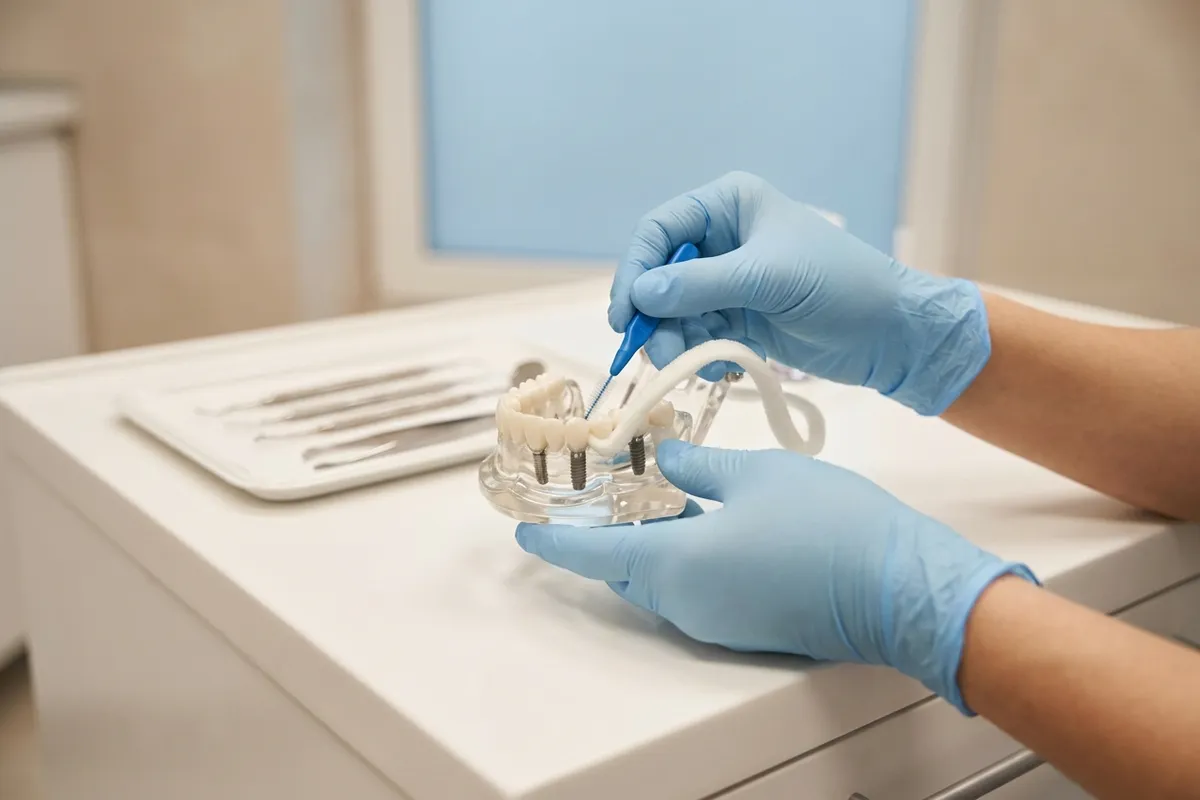
- Demonstrate your cleaning technique at a review so tools and access can be adjusted to your actual restoration.
- Report renewed bleeding, swelling, discomfort, or movement promptly rather than assuming a previous repair protects against every future problem.
- Attend recommended reassessments and retain treatment and implant records to support comparisons and any later component replacement.
Assessing implant problems, step by step
- 1
Identify the source of the problem
Describe pain, bleeding or movement and bring implant records if available. Examination and appropriate imaging help distinguish a loose component from disease affecting implant support.
- 2
Agree on treatment for the cause
Options may include component repair, cleaning or further treatment of surrounding tissues. The plan explains whether the implant can be retained and when specialist assessment is needed.
- 3
Review the response
Follow-up checks assess comfort, stability and tissue health. Report continuing movement or worsening symptoms so the plan can be reassessed rather than assuming the problem is resolved.
Services
Other treatments we offer
Questions about this treatment
Book your visit in Gloucester
Leland Dentistry & Implants is accepting patients at 76 Prospect St. Use our online form to request a time.
About us
Why patients choose Leland Dentistry
Dr. Brian Leland teaches other dentists how to place dental implants.
Board-certified expertise
Dr. Leland is a Diplomate of the American Board of Oral Implantology.
Advanced treatments & restorations
From 3D-printed same-day single teeth to full-mouth solutions, our office utilizes the most cutting-edge technology to deliver restored smiles.

Clear communication
Your treatment plan is explained in plain English or in conversational Mandarin Chinese.
Visit us
We're waiting for you in Gloucester
76 Prospect St
Gloucester, MA 01930