
Service
Dental Implants in Gloucester
Dr. Brian Leland places single and multiple dental implants at Leland Dentistry & Implants in Gloucester. He is a Diplomate of the American Board of Oral Implantology. This means he has extensive training to handle complex cases, including patients who require zygomatic or pterygoid implants due to bone loss.
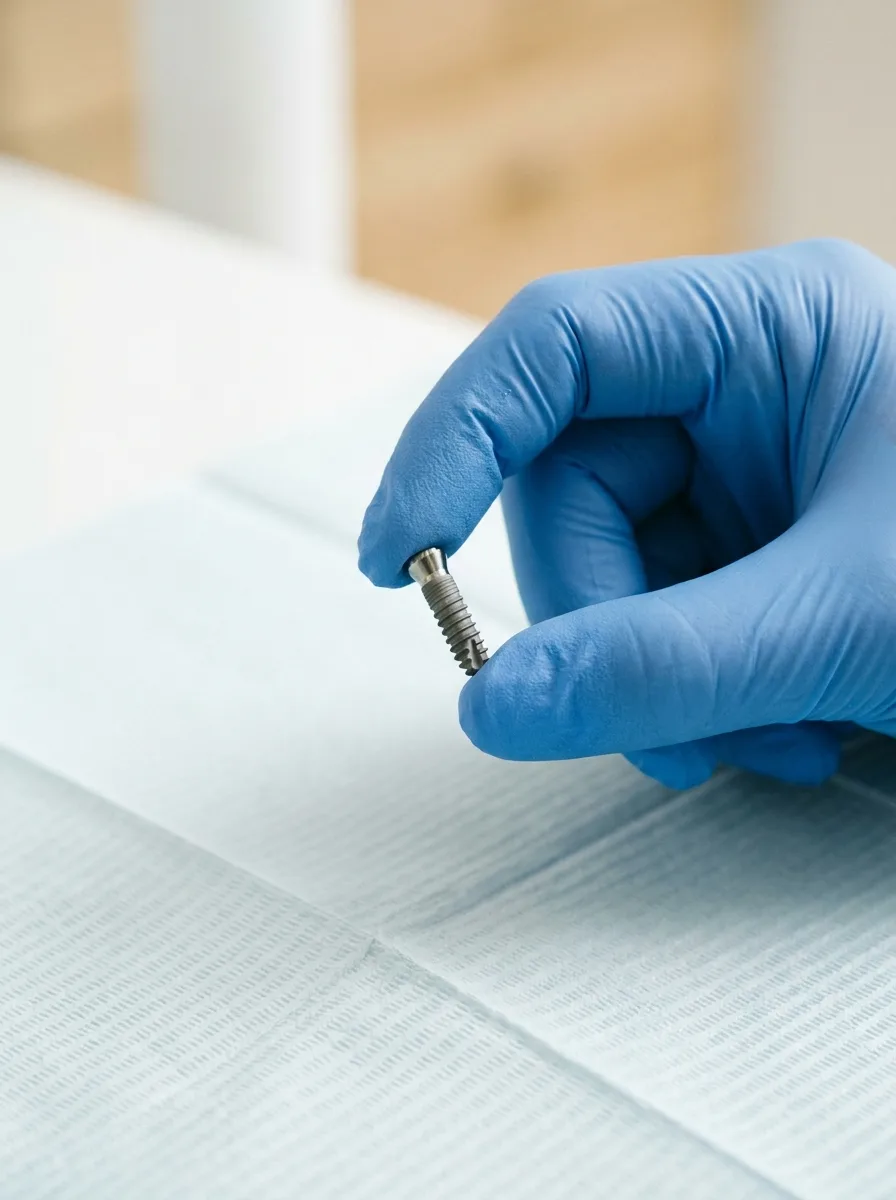
Understanding dental implants
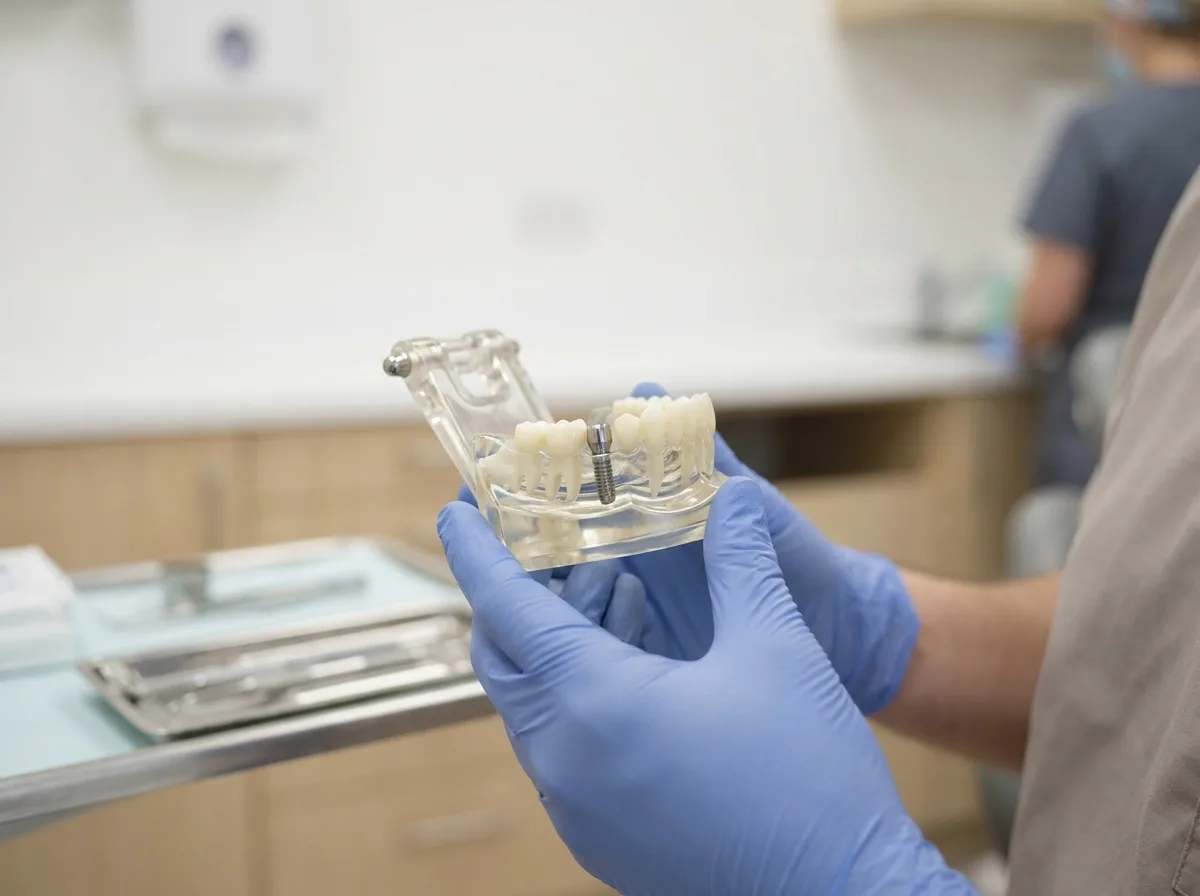
A dental implant is a post placed in the jaw to support a replacement tooth or prosthesis. It replaces the role of a missing root; a crown, bridge, or denture provides the visible teeth. Treatment includes planning, placement, healing, and restoration, with the sequence adapted to your anatomy and health.
The implant placed in the jaw is only one part of the replacement. An abutment connects it to the visible crown or other restoration. Planning therefore needs to account for both the surgical site and the tooth that will eventually sit above it. Ask how these stages fit together and what you will use while the implant heals.
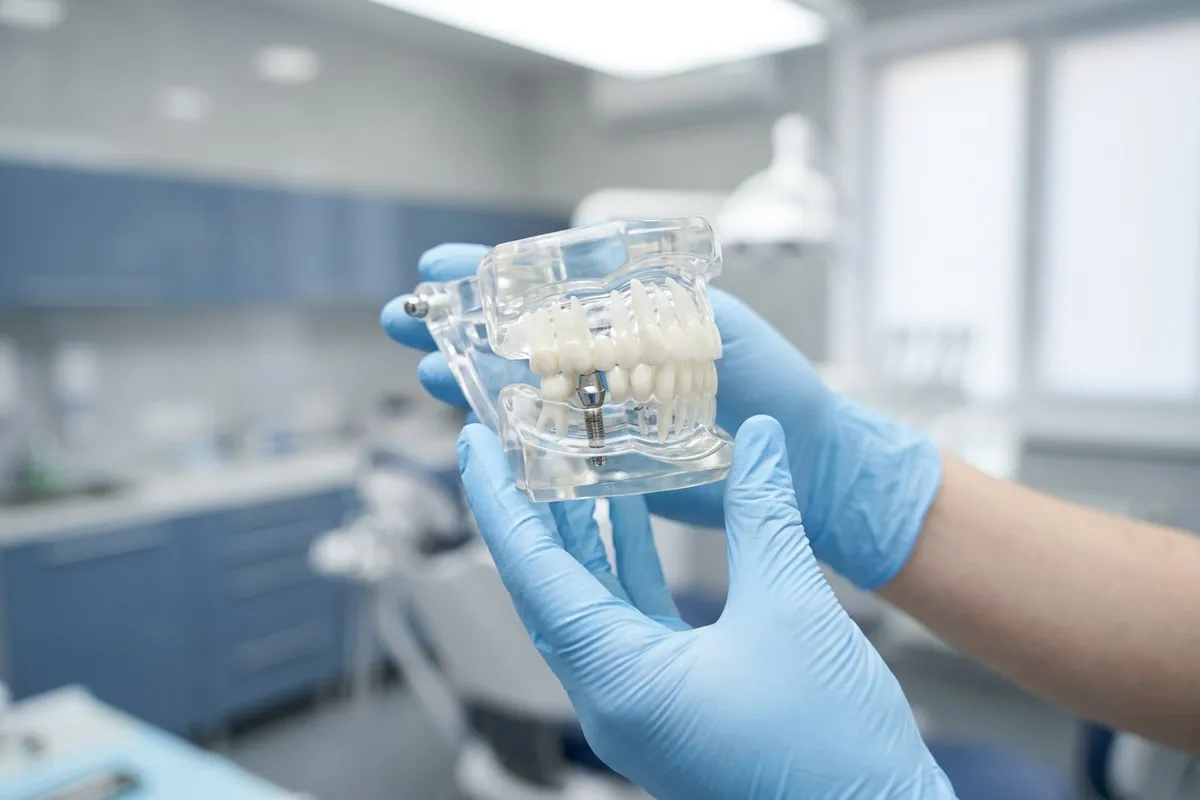
Why Implant Replacement May Help
Missing teeth can affect chewing, appearance, and the stability of the remaining dental arrangement. An implant can support a replacement without preparing adjacent teeth in some cases. It can also help retain a denture. The benefit depends on your starting condition and should be weighed against surgery, time, cost, and maintenance.
A missing tooth can change how you chew and leave a gap that is difficult to manage. An implant may provide support without using neighboring teeth as bridge supports, but it requires surgery and suitable bone. Replacing a tooth this way is a choice to evaluate alongside a bridge or removable replacement, rather than an automatic response to every gap.
- An implant can support a replacement crown without preparing neighboring teeth in suitable cases, although it requires its own surgical planning.
- Several implants may support a bridge or denture when multiple teeth are missing; the restoration design determines how support is distributed.
- Implants are one replacement option, and their potential benefits should be compared with bridges, removable dentures, and appropriate monitoring of the space.
Who May Be a Candidate
Suitable candidates need an assessment of bone, gum health, medical conditions, and daily cleaning habits. Smoking and some health factors can affect healing and risk. A lack of bone may require grafting or a different option. Implant treatment is individualized and is not automatically suitable for every missing tooth.
An implant needs a site that can support it and an oral environment you can maintain. Previous gum disease, smoking, and health conditions that affect healing deserve discussion before surgery. Explain any difficulty cleaning the proposed area. Adequate bone is only part of suitability; the position of the eventual crown and access for daily cleaning also need consideration.
- The available bone and gum condition affect placement; grafting or another design may be needed when support is limited.
- Disclose smoking, diabetes, medicines affecting bone, and previous healing difficulties so the surgical and maintenance risks can be considered.
- Discuss whether you can clean around the proposed replacement every day; access and long-term maintenance influence suitability.
Timing and Healing
Implant care often takes place over several stages while the surrounding bone heals. Some patients need an extraction or graft first; others may qualify for a different sequence. Immediate placement or a temporary tooth is only appropriate in selected circumstances. The dental team explains the likely timeline without promising the same schedule for everyone.
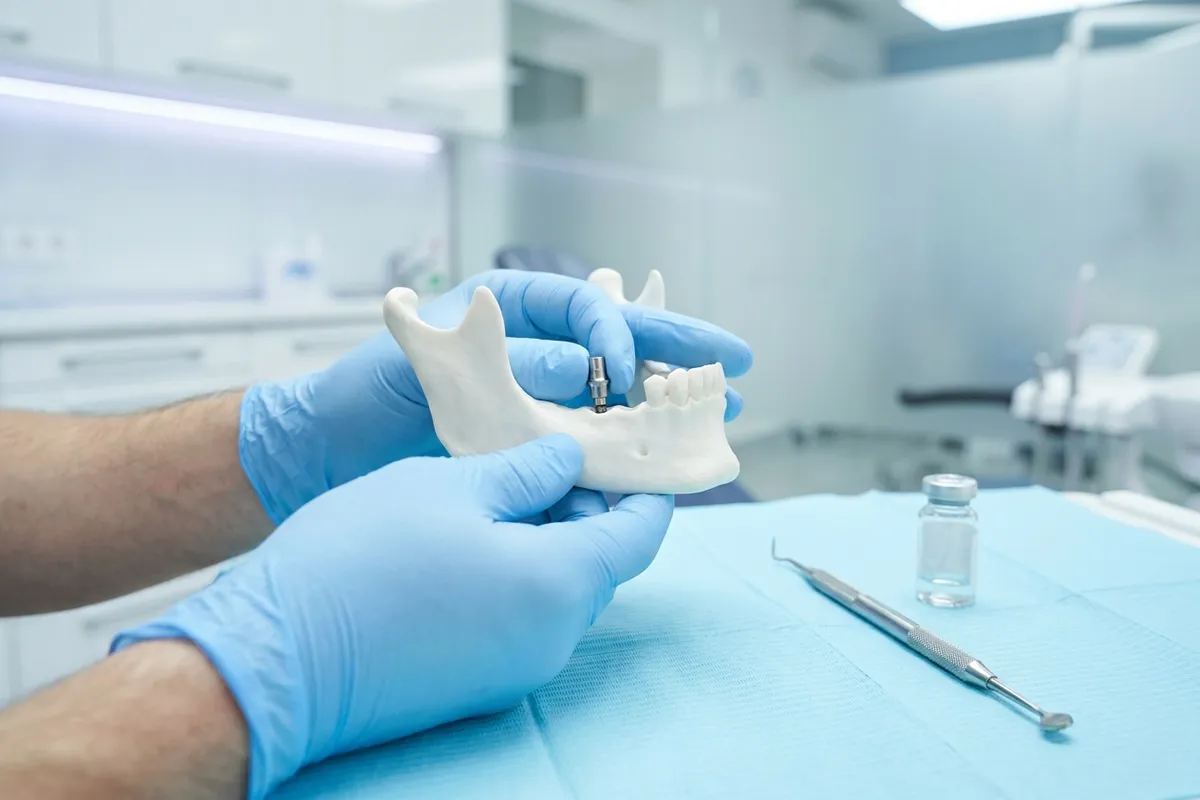
Assessment for dental implants
The dental team examines the teeth, gums, bite, and space for the replacement and reviews your medical history. Appropriate imaging helps assess supporting bone and nearby structures. The dental team discusses whether preparatory care or specialist input is needed, compares alternative replacements, and explains the expected treatment stages and ongoing maintenance.
- Selected imaging assesses bone dimensions and nearby structures, while examination checks the bite and the space available for a replacement.
- Ask whether extraction or grafting comes first, when healing will be checked, and what temporary tooth arrangement is realistic.
- Clarify who provides placement and restoration, how the stages are coordinated, and whether specialist involvement is appropriate for your site.
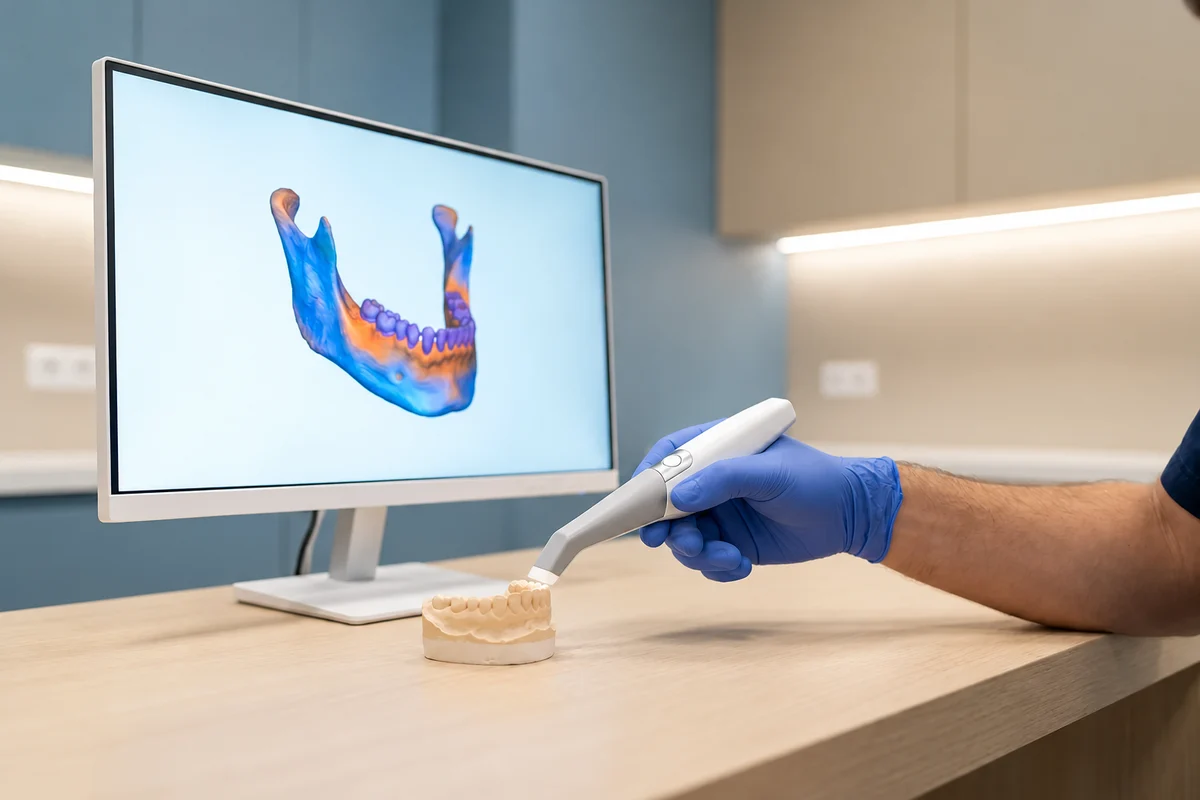
Implant and Replacement Options
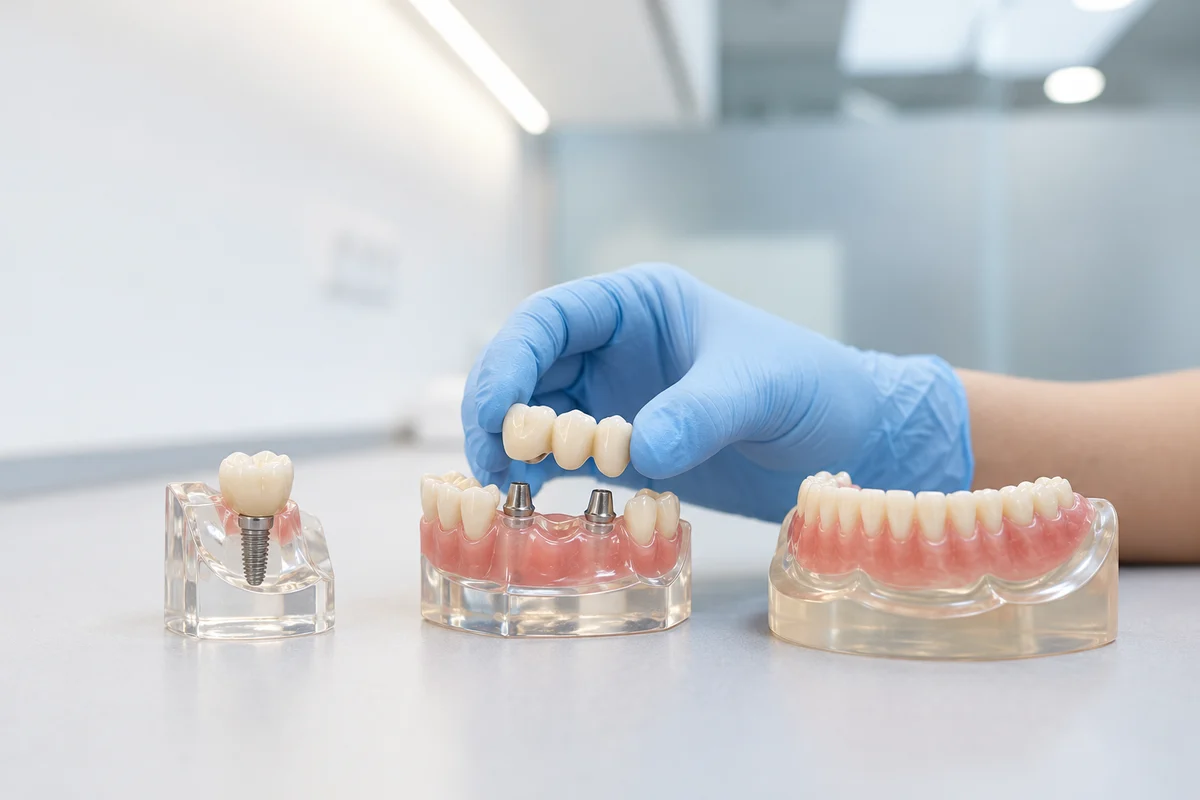
One implant may support a crown, while several can support a bridge or an implant-retained denture. The implant is placed, healing is monitored, and the final replacement is fitted when the site is ready. The number of implants and restoration design follow your needs, not a fixed formula.
Compare an implant-supported tooth with the other replacements suitable for your gap. An implant introduces a surgical healing stage, whereas a conventional bridge uses neighboring teeth and a removable appliance is taken out for cleaning. Ask whether grafting would add another procedure, how temporary teeth would be managed, and which approach best balances function, preparation, and maintenance in your mouth.
Recovery and Long-Term Care
After surgery, follow the written instructions for cleaning, activity, and comfort, and attend healing reviews. Implants require daily cleaning and professional maintenance; inflammation can develop around them. Contact the treating team about persistent pain, swelling, or a loose component. Longevity varies, and the visible restoration may need repair or replacement over time.
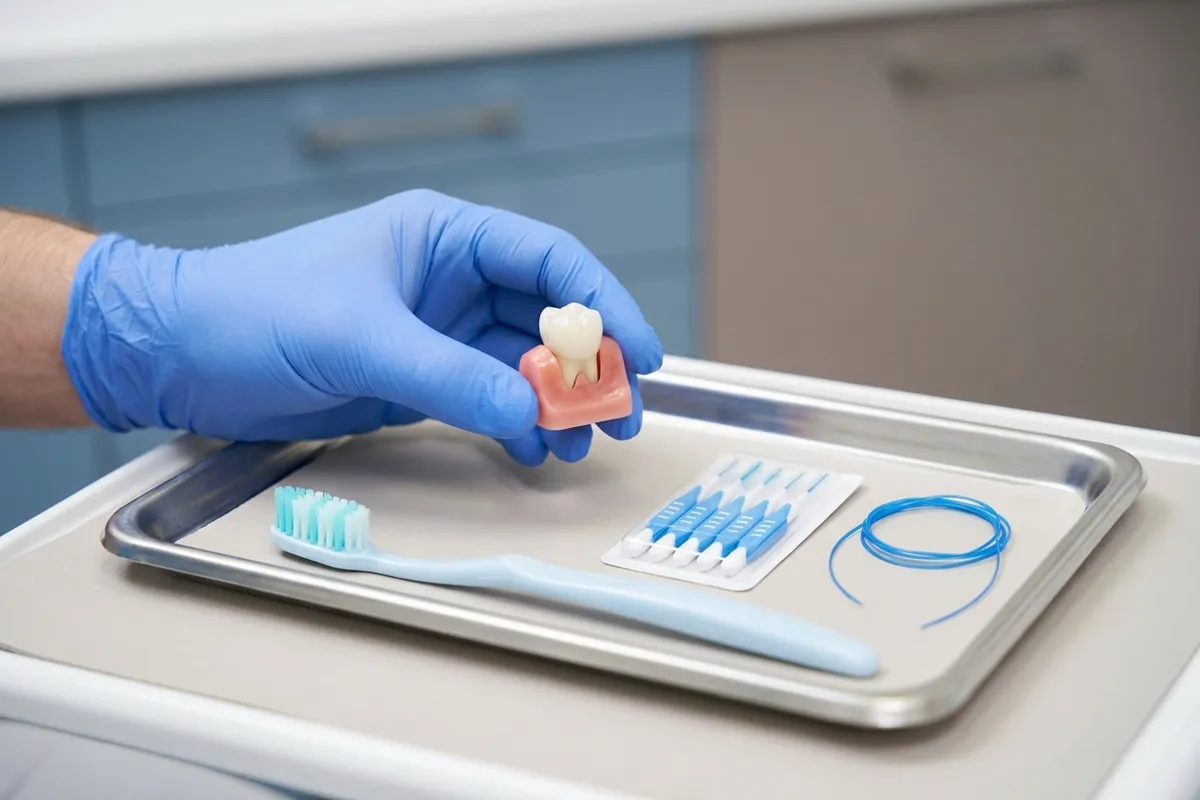
Care changes as an implant site heals and receives its final tooth. Follow the surgical instructions first, then learn how to clean around the crown and its gumline. Keep the implant identification information with your dental records. Report pain, movement, or renewed bleeding promptly; a replacement that feels comfortable still needs reviews of its supporting tissues and connecting components.
- Follow surgical cleaning and activity instructions, and avoid placing chewing forces on the site before the treating team permits it.
- After restoration, clean around the implant and under any connected bridge or appliance using the tools demonstrated for your design.
- Report bleeding, swelling, movement, or a loose component promptly; an implant-supported tooth still needs professional monitoring and possible repairs.
Dental implants, step by step
- 1
Assess the implant site
The dental team reviews your health, gums and available bone, using imaging when indicated. Discuss implant options and whether an extraction or graft would come first.
- 2
Place the implant and review healing
If an implant is appropriate, placement follows the agreed surgical plan. Healing and stability are checked before moving to the replacement tooth; timing varies by case.
- 3
Fit and maintain the replacement tooth
When the site is ready, the restoration is fitted and your bite is checked. Learn how to clean around it and arrange ongoing implant reviews.
Services
Other treatments we offer

Questions about this treatment
Schedule your implant consultation
Leland Dentistry & Implants opens in January 2027 at 76 Prospect St. Book an appointment online to discuss your dental implants with Dr. Leland.
About us
Why patients choose Leland Dentistry
Dr. Brian Leland teaches other dentists how to place dental implants.
Board-certified expertise
Dr. Leland is a Diplomate of the American Board of Oral Implantology.
Advanced treatments & restorations
From 3D-printed same-day single teeth to full-mouth solutions, our office utilizes the most cutting-edge technology to deliver restored smiles.

Clear communication
Your treatment plan is explained in plain English or in conversational Mandarin Chinese.
Visit us
We're waiting for you in Gloucester
76 Prospect St
Gloucester, MA 01930